
The VerdictEditorial
4:3 stretched makes enemies look wider on your screen without changing their hitboxes, and it cuts your rendered pixel count — that combination, plus a decade of muscle memory inherited from CS 1.6 and CS:GO, is why 709 of 880 recorded pros refuse to switch. The dominant exact setting is 1280x960 (559 players), the sweet spot between stretched-model width and acceptable blur. If your goal is to copy what works at the top of the game, 1280x960 stretched is the single most defensible setting in competitive FPS.
Resolution spreadVerified data
The OutliersEditorial + data picks
- Black Bars survives on exactly 75 setups — the black-bar purists keep 4:3 geometry without the width boost, a near-extinct third way.
- The stretch is not universal inside 4:3 either: 1920x1080 (84 players) and 1024x768 form the second and third camps, trading width for clarity and raw FPS respectively.
- R6 is the other true 4:3 scene — 42.9% of recorded Siege pros list 4:3 — while VALORANT runs the opposite distribution with 1920x1080 at 71.3%. Copying CS2's resolution habit into Valorant means copying the wrong game's data.
Who It Fits — and Who Should SkipEditorial
Get it if
- You want bigger apparent targets. A 4:3 image stretched to a 16:9 monitor widens every silhouette horizontally — the hitbox stays identical, but the model you track looks broader, and most of the field says that helps at range.
- You are mid-tier hardware chasing frames. 1280x960 renders 1.23M pixels versus 2.07M at 1920x1080 — on a 360–600Hz monitor, that headroom goes straight into frame stability during smokes and Executes.
- You are rebuilding habits anyway. If you are still below Diamond/Faceit 8, adopting the pro baseline early costs you nothing and matches most coaching material written for 4:3 crosshair placement.
Skip it if
- You play the info role. Support players who watch flanks and trade reads give up real peripheral information to the narrower 4:3 horizontal view — around 10.3% of recorded pros stick with 16:9, and the notable names (ropz, NiKo, chopper, magixx) skew toward that information-heavy style.
- You stream or record. Stretched 1280x960 looks soft to your audience even when it looks perfect to you; native 1080p is the viewer-friendly choice.
- You are switching mid-habit. Pro configs are stable for years because muscle memory is the point — expect 1–2 weeks of worse aim after changing aspect ratio, even at identical eDPI, and do not switch the week of a graded match.
Pro ExamplesVerified setups
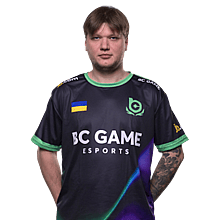 s1mpleBC.Game · Sniper
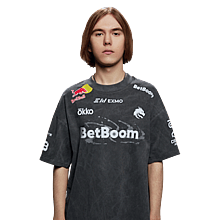 donkTeam Spirit · Rifler
FAQ
What resolution and aspect ratio do donk and s1mple actually run?
Both sit in the dominant camp: 1280x960 stretched, 4:3. That is the exact setting 559 of 880 recorded pros use. Their difference is not visual geometry but sensitivity style — donk runs 800 DPI x 1.25 (1,000 eDPI), s1mple runs 400 x 3.09 (1,236 eDPI). Same screen shape, opposite aiming engines.
What percentage of CS2 pros use 4:3 resolution?
80.6% — 709 of the 880 players with a recorded aspect ratio in our database. 16:9 sits at 10.3%, with 5:4 and 16:10 splitting the remainder.
Is 1280x960 really the most common CS2 resolution?
Yes — 1280x960 appears on 559 of 880 recorded setups (63.5%), more than three times the next value. It is the only resolution that a majority of the professional field shares.
Does 4:3 stretched give a real aim advantage?
No hitbox changes and no measured, universal advantage — stretched models look wider and move faster across the screen, which some players convert into better tracking and others into worse distance judgement. The honest read of the data: it is the field's equilibrium, not a cheat code. Adopt it to match the baseline, keep it because it suits you, change it without guilt if it does not.